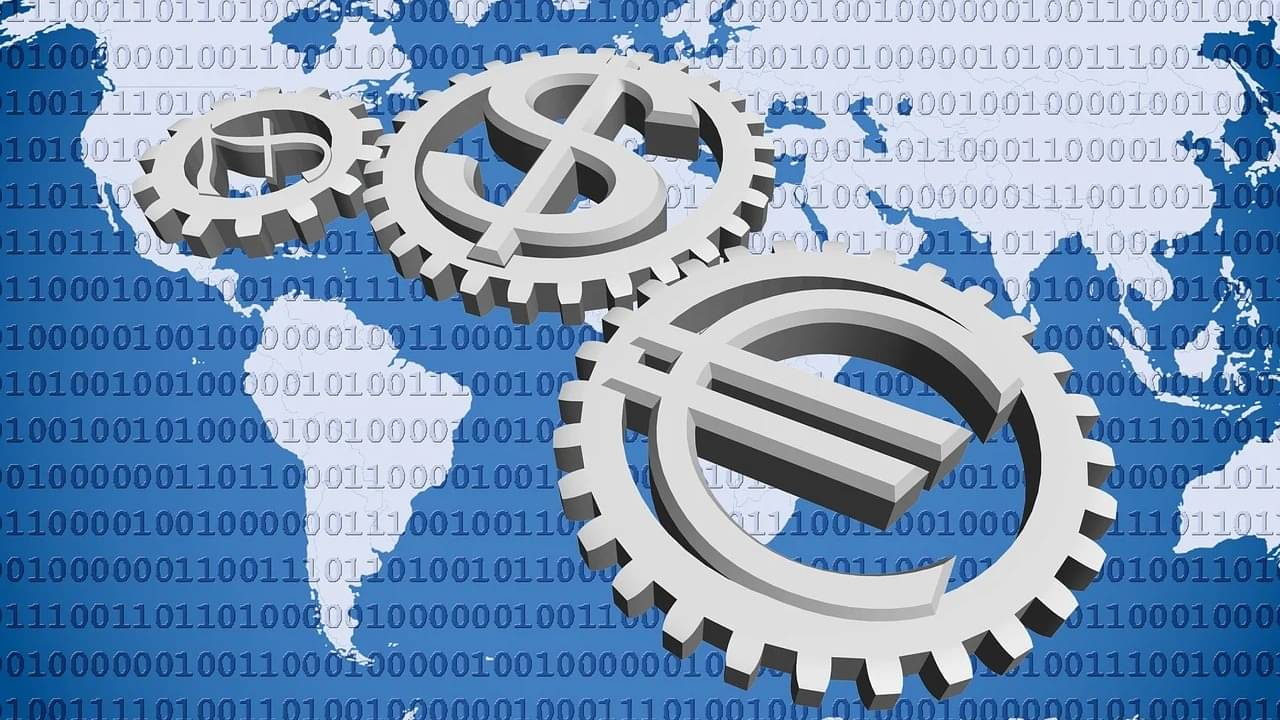
Global economy | Image: Pixabay
At a time when the global economy teeters on the brink of instability, the United States has carried out airstrikes on three pivotal Iranian nuclear sites. President Trump labels it a “preemptive strike” aimed at dismantling Tehran’s enrichment capabilities. You can find more details in this Bloomberg article discussing the potential escalation.
Bloomberg’s analysts caution that Iran might retaliate in several alarming ways:
- Direct assaults on American personnel or embassies in the Middle East.
- Attacks on Gulf energy infrastructure in Iraq, UAE, or Saudi Arabia.
- Closing the Strait of Hormuz, a crucial oil passage.
Should Hormuz close completely, oil prices may skyrocket past $130 a barrel, driving US inflation to 4% by summer. This presents a worrisome scenario for policymakers, potentially delaying rate cuts and impacting stock markets. As Ben May from Oxford Economics points out, “Higher oil prices and CPI spikes would be a nightmare for policymakers.”
The delicate situation might also shock the liquefied natural gas (LNG) sector. Notably, Qatar, which provides 20% of the world’s LNG, entirely depends on the Strait of Hormuz. Any disturbances could lead to soaring European gas prices, complicating the already tense energy landscape, particularly affecting developing economies.
There is, however, a glimmer of hope. OPEC+, led by Saudi Arabia, has a bit of spare production capacity. Additionally, the International Energy Agency (IEA) could coordinate emergency oil releases. Yet, these measures offer only temporary relief. Military retaliation from Iran might drive investors towards safe havens like gold and the dollar, while equities take a nosedive.
In the midst of these tensions, Trump’s impending “reciprocal tariffs” on major trading partners threaten to exacerbate the fragile global situation. With wars, shipping disruptions, and high interest rates causing strife, the tariffs could further hinder global trade.
Attention now shifts to Tehran. If Iran opts for aggression over diplomacy, economists fear a slide towards stagflation—characterised by high prices, sluggish growth, and enduring geopolitical uncertainty.
Also, don’t miss: Will Trump’s Iran Strike Send Oil to $100 and Crash Global Markets?
Finally, here’s a brief table summarising potential impacts:
| Scenario | Potential Impact |
|---|---|
| Strait of Hormuz Closure | Oil prices soar, US inflation rises |
| Iran Retaliation | Gold and dollar gain, equities fall |
| Disruption in LNG Markets | European gas prices surge |
| Trump’s Tariffs | Further strain on global trade |
With this complex scenario unfolding, the world watches with bated breath.