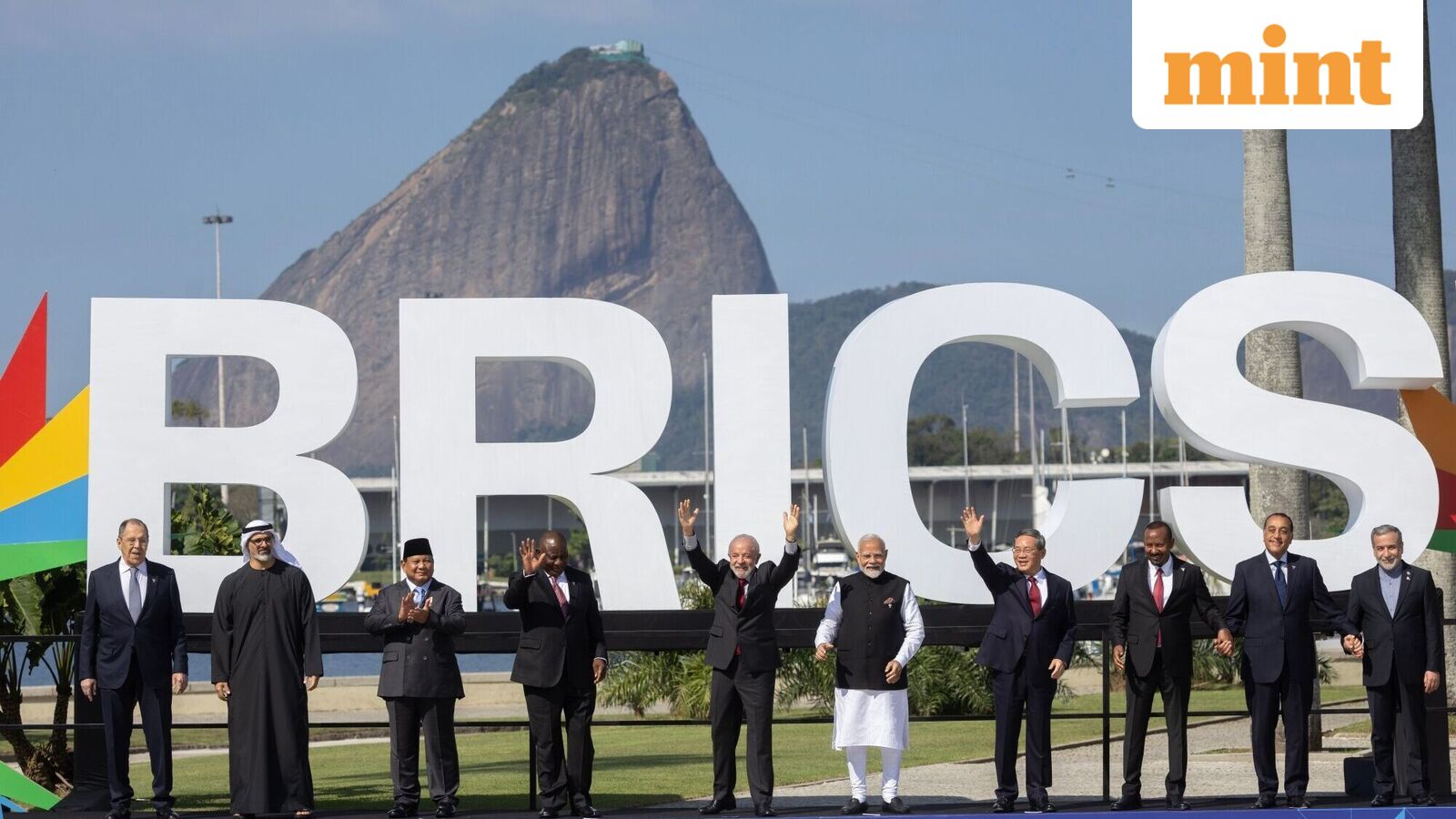
The esteemed BRICS consortium, which includes Brazil, Russia, India, China, and South Africa, is notably reducing its dependency on the US Dollar by increasingly amassing gold. Although officially these nations possess about 20% of the world’s gold reserves, their combined influence, alongside their allies, now embodies nearly 50% of global gold production.
Contents
BRICS reducing dependence on the US Dollar
BRICS nations have actively pursued diminishing their dollar reliance within trade. Over the past decade, the proportion of intra-BRICS trade conducted in local currencies has consistently increased. Approximately one-third now bypass the dollar entirely. Take, for instance, the bilateral trade agreements such as those between India and Russia or China and Brazil, which illustrate a practical shift. These arrangements strive to reduce transaction costs, minimise sanction exposure, and curb dependence on the cyclical nature of dollar liquidity, as noted by Sachin Jasuja of Centricity WealthTech.
BRICS gold reserve
Russia, China, and their compatriots are leading this golden charge. In 2024, China produced an impressive 380 tonnes, and Russia followed with 340 tonnes. Interestingly, Brazil made its first purchase in years, acquiring 16 tonnes in September 2025. Anuj Gupta from Ya Wealth explains that BRICS nations are strategically producing more gold whilst selling less, buying from the international market as well. Between 2020 to 2024, they’ve acquired over half of the global gold bought by central banks, a fact perhaps unsettling for some US policymakers.
What lies behind this BRICS dual strategy?
This dual gold strategy reflects growing doubts about the global financial system dominated by the US Dollar. Today, BRICS economies represent nearly 30% of global trade. Their collective financial decisions carry enormous weight. A long-time objective has been to reduce reliance on Western financial systems, especially the dollar.
Sachin Jasuja emphasises that increasing control of gold reserves signals stress within this dollar-focused system. Recent developments suggest that the once-unquestioned supremacy of the US Dollar is now being gradually questioned, rather than abruptly challenged.
How will this strategy work?
Ponmudi R from Enrich Money remarks on how BRICS’ rising clout in annual gold production offers them significant strategic flexibility. It’s not an immediate bid for dominance, but a cautionary move enhancing strategic options. This aligns with a broader risk management and diversification ethos, especially in light of geopolitical uncertainties.
Trigger for this shift
The impetus for this strategic pivot arose quite dramatically post the Russia–Ukraine conflict. Many Western powers froze Russia’s foreign reserves, a move that changed perceptions of dollar-denominated assets’ safety. Since then, sovereign states are shifting towards neutral, sanction-free assets, as Jasuja astutely notes.
This reserve management now favours politically neutral and physically held assets, illustrating a move against potential external control threats. The BRICS central banks, especially China, Russia, and India, are now amongst the world’s most significant gold holders.
Challenge for BRICS gold-backed currency?
The conversation around a potential BRICS gold-backed currency does not mark an end for the dollar. Rather, it’s a shift towards a more diversified and multipolar system. This sees gold regaining prominence as a cornerstone of financial trust. Ponmudi R points out that structural challenges lie beyond gold — in the realms of the petrodollar system, trade realignments, and evolving import tariffs.
Furthermore, China’s move towards electric vehicles and renewable energy heralds a reimagined global trade landscape. This reduces reliance on dollar-linked commodity pricing and fosters long-term strategic autonomy.
In conclusion, while the BRICS’ gold accumulation doesn’t dethrone the dollar, it certainly heralds a credible shift towards a more balanced global economic environment. Gold, silently, is reassuming its historic role as the bedrock of monetary confidence, an astute observation from Sachin Jasuja.
Disclaimer: This narrative aims to educate. The opinions are those of individual analysts or broking firms, not Mint. Seek certified advice for investment decisions.