If a worldwide financial balkanization happens, the coming decades would be defined by economic conflict and the constant threat of all-out war
Ah, the ever-enigmatic state of the global economy! One can’t help but ponder: What on earth would happen if the financial world shattered into a cacophony of regions and rivalries? Imagine, if you will, a scenario where the financial stability we’ve taken for granted becomes fragmented. Let us dive into this potential quagmire, dissecting the various strands that could lead to such an outcome.
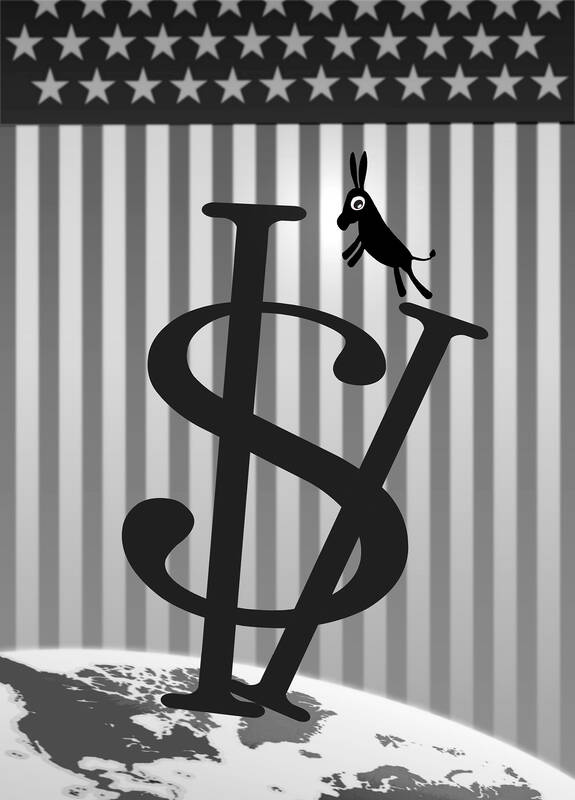
With the US dollar as the dominant reserve currency, the United States has enjoyed some significant economic advantages. It can borrow at low rates (IMF). However, recent policies have caused quite the stir. Since the commencement of President Trump’s second term, alarms regarding America’s extraordinary benefits have rung louder than Big Ben on New Year’s Eve. His actions, you see, have systematically sapped the dollar’s fortress-like status.
Now, let’s not focus entirely on the waning prowess of the US. Such a narrow lens might let the fiery inferno forging behind remain unnoticed. The potential lose of the dollar’s reserve currency status sets off waves across the entire world’s economic sphere. Should the dollar plummet, brace yourselves for a veritable tidal wave of financial instability.
The Intricacies of a Reserve Currency
To wield the immense responsibility of being a global reserve currency, certain conditions must be met—seven, to be precise. The currency issuer must exhibit macroeconomic stability, ensuring low inflation and sound debt management. Equally, a politically independent central bank is vital, committed to transparency and stability in monetary policies. Confidence in the rule of law, deep financial markets offering tradable assets, and widespread acceptance are also crucial (Federal Reserve).
Considering these prerequisites, it’s glaringly apparent that recent US policies have tripped at nearly every hurdle. Massive tax cuts coupled with unabated spending threaten macroeconomic stability. Furthermore, Trump’s audacious approach toward the Federal Reserve has clearly strained its independence.
The Shift Towards Alternatives
And what of the run for alternatives in this tumultuous financial theatre? As doubts about the dollar grow, nations eye the euro or the yuan. Central banks diversify reserves, venturing into gold and other assets, subtly accelerating the dollar’s decline (ECB).
Should doubts about the dollar’s reliability take hold, the outcome won’t be a gradual transition—it’ll be chaotic and disorderly. Investors would rush to exit, unravelling markets in panic. Central banks and large funds could shift reserves into gold, euros, or yuan, disrupting Treasury markets and driving up yields. Nobody wants to be the last one holding the bag, after all.
Alternatives and Their Limitations
Now, allow me to draw attention to Brexit and its implications. The United Kingdom’s gilt market, bearing similar constraints to Europe’s challenges in fostering eurobonds, remains rather undersized. Meanwhile, China’s bond market struggles with issues like capital controls and opaque politics, restricting its appeal as a reserve haven (Bank of England).
Even other options, like cryptocurrencies, face daunting limitations. The volatility is simply rife, preventing them from becoming dependable stores of value. Cryptocurrency markets, particularly deregulated ones, pose significant risks to the Treasury markets.
The Looming Risk of Financial Fragmentation
A financial realignment means fragmentation—currency exchange complications, legal uncertainties, and delays in cross-border transactions. Such division stifles global commerce, resulting in slower growth and heightened costs, especially for developing nations.
Lest we forget, institutions like the IMF and World Bank struggle to maintain stability when faced with fractured financial networks. Increasingly, regional bodies assume more responsibility, yet are they up to the task? Only time will tell.
The Unseen Threat: Geopolitical Tensions
Above all, this financial fracture portends a graver threat: geopolitical tensions might escalate into outright conflict. Deepening divides lead to the erosion of critical constraints on armed hostilities—making the spectre of war all the more probable.
In closing, this potential financial fragmentation is not a mere American dilemma but indeed a global concern. The fate of the greenback holds tremendous sway over international stability. Let’s hope the powers-that-be wisely navigate these turbulent waters, lest history remembers this era as the dawn of economic balkanization.
Dennis Snower, a distinguished scholar and insightful voice, brings further readings to life in this discourse. He’s affiliated with various esteemed institutions, offering a breadth of perspective on the matter at hand.
Continuing this enlightening journey, one must wonder how ecommerce and technology might intertwine with forthcoming financial intricacies. What riveting times lie ahead!