Contents
The US dollar is one of the biggest losers of ‘Liberation Day’
The US dollar is experiencing a significant dip, as it slides against various rival currencies, leading the dollar index to hit its lowest point since October. Yet, the term ‘Liberation Day’ has, rather ironically, become synonymous with the dollar’s decline. Daniela Sabin Hathorn, a senior market analyst at Capital.com, pointed out the greenback’s losing streak source.
This dive is raising eyebrows across global financial markets. Uncertainty remains pervasive, with new tariffs potentially being revised or even cancelled after negotiations. Some experts warn this situation could bring economic repercussions similar to those experienced during the Smoot-Hawley Tariffs of the 1930s. This set of protectionist trade policies escalated the Great Depression by igniting global retaliation, slowing international trade, and raising U.S. import taxes source.
Deutsche Bank: risk of dollar confidence crisis
In a timely move, Deutsche Bank has warned its clients about the possibility of a dollar confidence crisis. George Saravelos, the head of FX Research, revealed concerns about diminishing confidence in both the US dollar and the American economy. The dollar has indeed dropped 1.7% in recent times, reflecting a significant erosion of its safe-haven properties. Such developments may indicate a shift in capital flow allocations that could prove unwelcome for global central banks source.
Tariff Troubles: European Markets Join the Rout
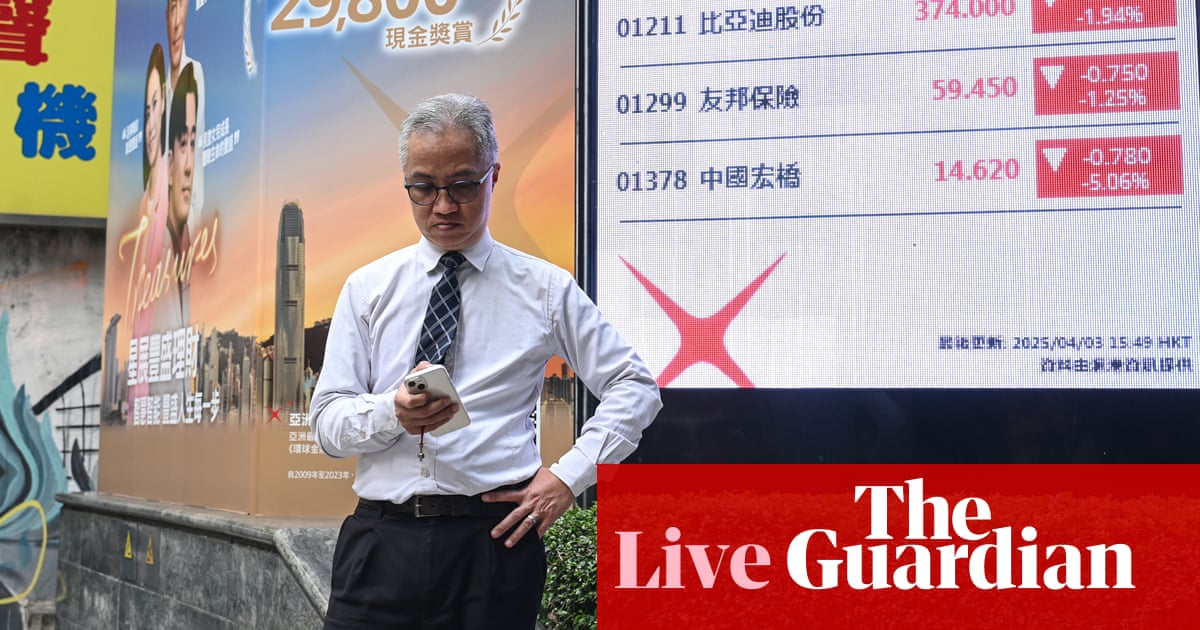
Meanwhile, over in Europe, stocks have also taken a hit. The pan-European Stoxx 600 index saw a notable decrease, a trend mirrored in Frankfurt’s DAX and Paris’s CAC 40. This slump owes much to President Trump’s aggressive tariff strategy, which has sent shockwaves throughout global markets. Analysts suggest that Asian countries were the hardest hit by these tariffs, with reciprocal tariffs on China rising to 34% source.
Roman Ziruk, senior market analyst at global financial services firm Ebury, noted, “Trump’s ‘Liberation Day’ announcements exceeded market expectations, leading to increased average tariff rates” source.
UK better equipped to weather the storm
In contrast, there’s a ray of optimism for the UK. Experts at T. Rowe Price, including Tomasz Wieladek, anticipate that the UK economy will swim against the tide, performing better than the eurozone amid these tough times. Britain’s new fiscal policies and the competitive edge from being outside much of the tariff crossfire could potentially elevate imports of cheaper goods, thereby boosting domestic investment and disposable income source.
Japanese disappointment and tariffs on Israel
Japan is notably disappointed by the lack of exemptions from U.S. tariff impositions. Prime Minister Shigeru Ishiba highlighted Japan’s regrets and a pledge to support domestic sectors affected by the new tariffs. Similarly, Israel’s finance ministry is gearing up to devise strategies in response to the US imposing a 17% tariff on Israeli exports, as the country seeks to navigate these choppy economic waters source.
Scottish industries bemoan tariffs
Scotland’s whisky and salmon industries have voiced dismay at the 10% tariffs on British imports, though they find solace in UK government efforts to negotiate a better deal with the US. Both industries rely heavily on American buyers, making this tarrif corridor a pivotal concern for them source.
In conclusion, uncertainty is the word of the day. With trade wars looming large, the financial landscape stands altered. Tensions continue to rise as the global market adjusts to new economic realities.