Donald Trump’s reentry into the White House has undeniably set the global economy abuzz.
Contents
The Tariff Offensive of 2025
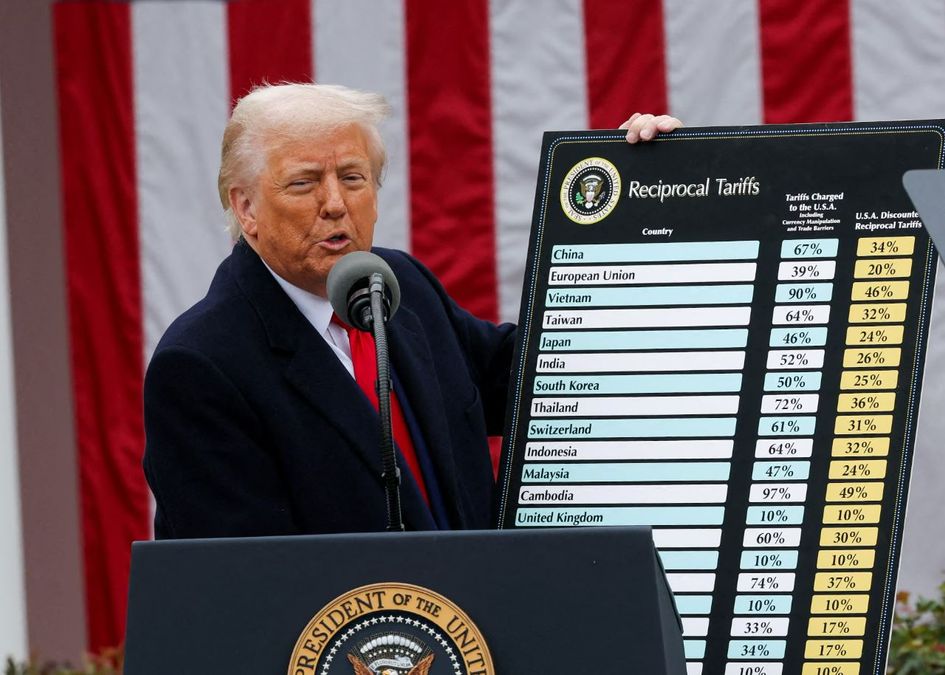
April 2025 marked the beginning of a sweeping tariff campaign by the US President. The objective was a dramatic reorganisation of global trade. These tariffs included a 10 per cent duty on all American imports and a staggering 145 per cent on Chinese goods. Such measures undoubtedly targeted America’s foremost trading ally. Additionally, the tariffs were extended to other trade partners: 60 per cent on Mexican goods, 45 per cent on European Union imports, 35 per cent on Canadian products, and 25 per cent on South Korean exports. Further insights can be found in Bloomberg’s coverage.
Impact on the Global Economic Outlook
The International Monetary Fund (IMF), amidst the turmoil, painted a mixed picture. In an April 17 release, the IMF expressed concerns about tariff-related uncertainties affecting global trust. Notably, the IMF highlighted that while there might be markdowns in growth projections, it refrained from forecasting a global recession. Kristalina Georgieva, the IMF’s Managing Director, suggested coordinated policies to steer the global economy toward stability.
Rising Recession Risk
A Reuters poll of over 300 economists from 50 nations offered a rather pessimistic outlook. A whopping 60 per cent identified a “high” or “very high” risk of global recession within the year. Only a minority of 66 economists suggested the risk was minimal. Disturbingly, 92 per cent believed the tariffs harmed global business sentiment. Global growth projections were subsequently adjusted, from 3.0 per cent down to 2.7 per cent. Especially hard-hit were Canada and Mexico, with projected growth rates dipping to 1.2 per cent and 0.2 per cent, respectively.
Small Businesses Sound the Alarm
The US Chamber of Commerce expressed grave concerns in a formal letter to the White House. The ever-escalating tariffs, the chamber warned, could cripple small businesses and thrust the economy into recession. The chamber’s President, Suzanne P. Clark, noted the heightened costs and disrupted supply chains jeopardising businesses. She articulated that essential imports like coffee and cocoa are irreplaceable domestically. Thus, the chamber advocated for an exemption system for small business importers, arguing for tariff waivers on non-US goods.
Official Administration Position
Reassurances from Trump’s administration were abundant. According to US Treasury Secretary Scott Bessent, the economy was far from recession. He addressed the House Appropriations Committee, forecasting an upbeat GDP revision in the coming weeks. Yet, official statistics from the US Commerce Department told a slightly different story. The first quarter observed a GDP contraction of 0.3 per cent, marking the first decline in three years. Moreover, imports fell by 2.8 per cent, signalling weakening domestic demand.
The Unfolding Trade Drama
Driven by these developments, China introduced stringent counter-tariffs. This development led multinational corporations to revise their revenue forecasts and delay expansion plans. Although the White House declared a 90-day halt on the fiercest tariffs, the damage to business confidence seems irreversible. James Rossiter, from TD Securities, captured this sentiment aptly, remarking, “Planning beyond three months is a monumental challenge for companies now.”
Global Banking Sector Reactions
The World Trade Organization anticipated a drop in global trade volumes due to Trump’s tariffs. The European Central Bank responded by cutting key interest rates, attributing the move to escalating trade tensions. Concurrently, the Bank of England highlighted heightened risks to both global growth and financial stability. These developments were elaborately covered by Bloomberg and Reuters.
From Inflation Concerns to Stagflation Fears
Higher import costs have stoked inflationary fears. Some economists are now warning of stagflation—a toxic mix of slow growth, rising unemployment, and persistent inflation. The Reuters survey revealed that 19 out of 29 major central banks may miss their inflation targets in 2025. More than half might continue to miss them in 2026.
The Road Ahead
As global economy navigates this tenuous phase, change is inevitable. The tariffs have disrupted a fragile post-pandemic recovery and reignited fears of economic unraveling. Long-lasting consequences are likely to pervade jobs, inflation, and investor confidence for years.