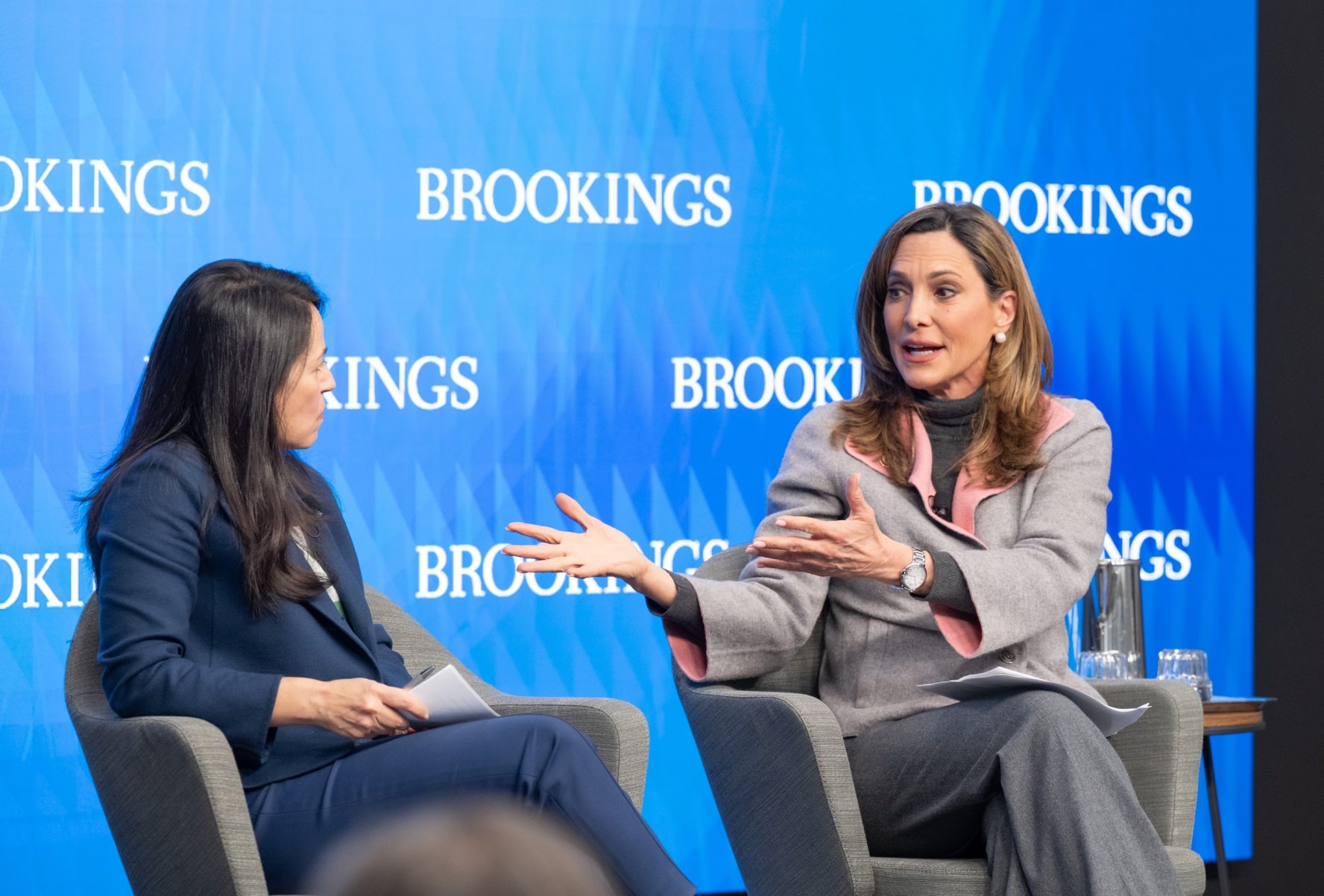
On 13 January 2026, the rather esteemed Center for Economic Security and Opportunity (CESO) convened a gathering to ponder over the immigration landscape. It aimed to reflect on policy developments from the previous year. The event kicked off with a delightful fireside chat featuring Representative María Elvira Salazar (R-Fla.). This was gracefully moderated by Marcela Escobari, a senior fellow in the Global Economy and Development program at Brookings. Following the chat, a spirited panel discussion was led by Tara Watson, director of CESO. The panel boasted distinguished participants such as David Bier from the Cato Institute, Wendy Edelberg of Brookings, Kristie De Peña from the Niskanen Center, and the renowned economics journalist Eduardo Porter.
Tara Watson opened proceedings by revealing findings from a fresh report crafted by herself, Edelberg, and Stan Veuger. The report pointed to a rather historic shift: Net migration to the United States turned negative in 2025. This marked a stark reversal from net inflows exceeding three million in 2023 and two million in 2024. Edelberg expounded on the economic repercussions, suggesting a worrying decline in labour supply growth and estimating a reduction in immigrant consumer spending that shaved $40 billion to $60 billion off GDP in 2025.
In her highlighting of “The Dignity Act,” Representative Salazar, who reintroduced the bill in summer 2025 alongside Representative Veronica Escobar (D-Tex.), explained its intentions. The act aims to reform the immigration system to better balance the United States’ economic and national security aspirations. Salazar championed the idea of allowing undocumented immigrants, sans criminal record, to emerge from “the shadows” by paying a fine to secure legal status. She stressed the importance of legalising this workforce for economic stability, envisioning a scenario where “everyone can show up Monday morning with no fear.” Notably, the bill lacks a path to citizenship for participating immigrants but enhances border security.
David Bier provided a critique of the administration’s enforcement strategy. He contrasted the serenity at the border with increased operations inland. Bier noted a significant decline in border encounters while arrests of non-criminals within the country surged tenfold since the start of the year. He also forewarned about the “public charge rule,” predicting that “further restrictions for all countries and immigrants” are on the horizon.
Turning to public sentiment and future policy, Eduardo Porter and Kristie De Peña shared insightful reflections. Porter cited polling data indicating a sharp reversal in public opinion. ICE approval ratings, once +16 in early 2025, plummeted to -14 by November. This, he attributed to reactions against mass deportations. De Peña pointed out that despite the restrictive nature of current policies, they compel an urgent discussion on reconstructing the system. As they looked forward to a potential political shift in 2028, Porter cautioned that returning to previous norms might prove difficult, likening it to not being able to “put the toothpaste back in the tube.” Meanwhile, Edelberg voiced concerns about the U.S. facing reputational damage, potentially driving global talent to regions like Canada, Europe, or Asia.
For further insights into current immigration developments, one could peruse Brookings Institution, Cato Institute, and the Niskanen Center.
Tables of Interest
| Year | Net Migration (in millions) |
|---|---|
| 2023 | +3.0 |
| 2024 | +2.0 |
| 2025 | -0.5 |
Key Points to Consider
- The introduction of “The Dignity Act” and its implications.
- Shifts in public opinion and the impact on ICE ratings.
- Anticipated changes in immigration enforcement strategies.
These discussions remain pivotal as the U.S. navigates its immigration landscape amidst evolving global and domestic pressures.