Amidst the bustling corridors of global finance, Nilton David, Director of Monetary Policy at Brazil’s Central Bank, recently addressed the notion of BRICS economies crafting markets substantial enough to rival the dollar in the next decade. In a rather British understatement, David observed, “There is not a meaningful stock of BRICS-denominated assets that could offset the dollar at the moment.”
During a central bank’s online session, David acknowledged the burgeoning economic prowess of the BRICS nations—Brazil, Russia, India, China, and South Africa—as well as new members joining in 2024 such as Egypt, Iran, Ethiopia, and the UAE. Yet, he was forthright in his view that it remains an unlikely tale for these nations to forge financial structures capable of competing with the dollar’s international clout.
BRICS long-term monetary goals
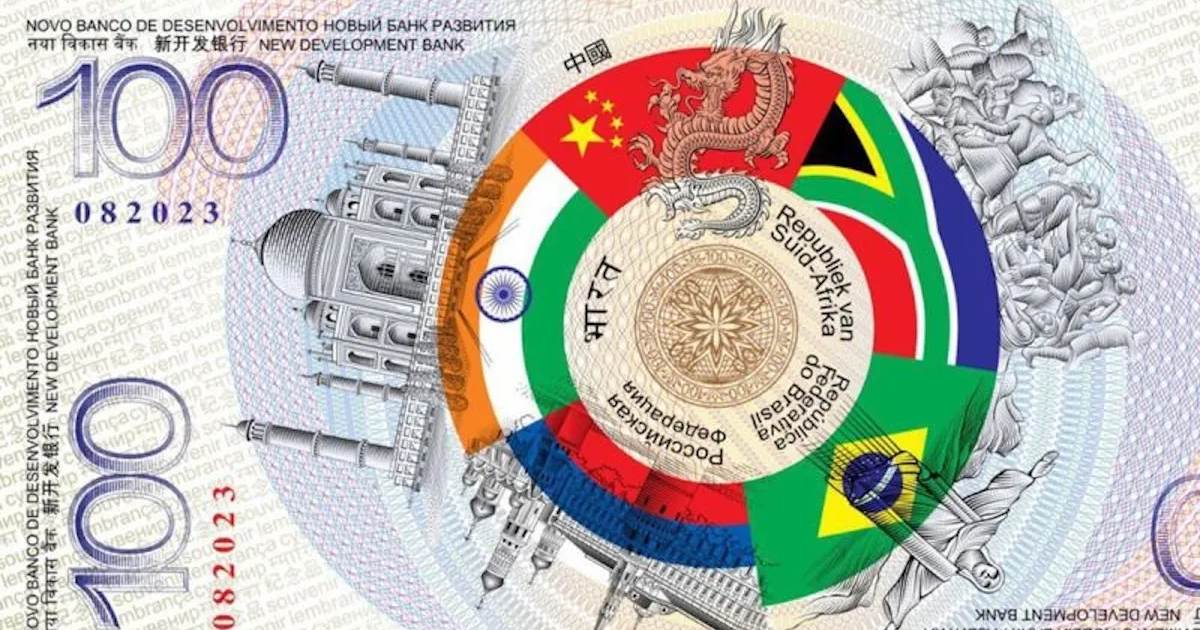
The lofty aspirations of the BRICS bloc primarily revolve around a gradual reduction in dependence on the venerable U.S. dollar. There’s talk of a potential BRICS currency, an element of their strategic de-dollarization plan. This is part of a grander vision to foster a multipolar global financial order.
Moreover, the notion of alternative payment frameworks to ease bilateral trade deals was embraced. However, David was keen to point out that these are far from posing a substantial challenge to the dollar’s entrenched supremacy.
Meanwhile, Reuters noted Brazil’s pragmatism. It seems a sensible stance within the leadership, even as the likes of Russia and China advocate for fiscal sovereignty. While some might imagine an insurrection against the dollar, Brazil takes a more cautious route.
With practical minds at the helm, Brazil’s presidency of the BRICS focused on practical measures. This includes the linking of payment infrastructures and the exploration of blockchain protocols. That’s all very well until you consider previous tensions such as the U.S.-China trade war and sanctions from the United States on China and Russia. These, curiously enough, have invigorated the push for economic independence within the bloc.
Notably, former President Donald Trump voiced his unequivocal opposition. In classic form, he vowed stringent sanctions on those seeking to undermine the dollar’s pre-eminence. “The idea that the BRICS countries are trying to move away from the dollar, while we stand by and watch, is OVER,” he announced on Truth Social.
Now, while no BRICS currency has been conjured just yet, there remains an active promotion of bilateral trades in local currencies. Despite ambitions to craft a currency that dares to rival the dollar, the journey there is still a trifle far-fetched.
As it stands, Brazil’s leadership steers towards subtle strategies, underscoring a blend of practicality and vision. There’s an evident embrace of innovations accepted by international regulatory entities such as the Bank for International Settlements. However, the journey will be wrought with complexities and challenges deserving of a sharp eye and a steady hand.