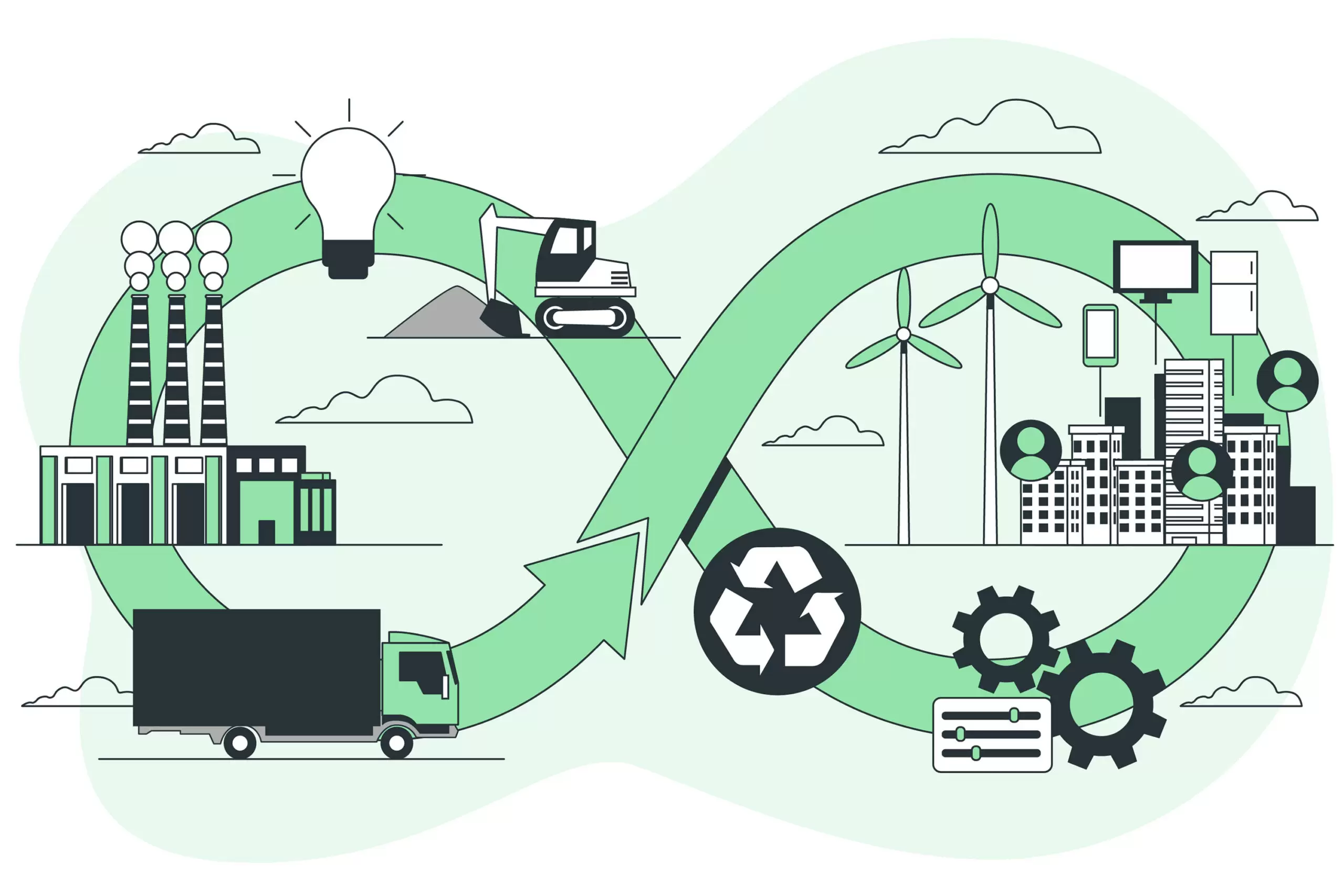
In an admirable effort, the Commission has set forth several initiatives to spur the EU’s journey towards a circular economy. This groundwork anticipates the upcoming Circular Economy Act, earmarked for 2026. A circular economy bolsters competitiveness and economic growth by advocating the reuse, recycling, and remanufacturing of materials. The Act will align with the EU’s objectives under the Competitiveness Compass and the Clean Industrial Deal. By 2030, the EU aspires to double the share of recycled material in its economy and emerge as a global front-runner in circular economy practices.
The day’s events will feature a strategic dialogue on circularity, complemented by an array of new measures. These encompass rules on waste shipments and an evaluation of electronic waste legislation. In the coming days, expect fresh regulations to enhance recycling efficiency and material recovery from waste batteries. This dialogue marks the commencement of a public consultation with stakeholders, inviting contributions and evidence soon. These initiatives aim to invigorate the transition and bolster enforcement of current laws.
h3 style=”text-align: justify;”>digitalisation and waste shipment classification
The Commission has unveiled a plan for a Digital Waste Shipment System. This will usher in a shift from paper-based to digital processes for waste transport within the EU’s single market. Such a move will alleviate administrative strain while enhancing competitiveness. By May 2026, digital systems are to wholly supplant paper procedures. This simplification will not only improve tracking but also prevent illegal shipments, ensuring the most efficient recycling across Member States.
Simultaneously, a public consultation has been launched. It seeks to harmonize classifications of specific waste types—commonly known as “green-listed” waste. This measure is designed to ease cross-border waste shipments. Interested parties may participate via the ‘‘Have Your Say’ portal till 31 October 2025.
Contents
evaluation of the waste electrical and electronic equipment directive
The Commission has also published an evaluation of the Waste Electrical and Electronic Equipment (WEEE) Directive. Addressing burgeoning e-waste challenges, the evaluation seeks alignment with the EU’s circular economy goals. Alarming gaps came to light, notably that almost half of e-waste remains uncollected, failing collection targets across EU nations. Electronic waste is Europe’s fastest growing waste stream, rising by roughly 2% annually. There’s tremendous potential to reclaim and recycle critical raw materials, thus fortifying the circular economy.
next steps
Insights from today’s dialogue, evaluations, and consultations will shape the Circular Economy Act. This paves the way for the EU’s evolution towards a circular economy. Later this week, new regulations will be proposed to boost recycling efficiency and reclaim materials from batteries. Moreover, further stakeholder engagement will occur through public consultations.
background
EU manufacturers, on average, allocate over twice the expenditure on materials than on labour or energy. Many depend on imports of essential materials from abroad, rendering them susceptible to price fluctuations and supply disruptions. Circular practices that champion resource efficiency, design innovation, and recycling lessen these risks while cutting costs. Furthermore, such circular solutions are pivotal for achieving climate neutrality by 2050, potentially contributing to 20-25% of required greenhouse gas emission reductions.