By Jamie McGeever
ORLANDO, Florida (Reuters) – TRADING DAY
Diving into the dynamics pushing global markets
By Jamie McGeever, Markets Columnist
Hey, folks, let’s chat about how world markets are going through another quirky phase. Stocks are soaring to new heights, Wall Street’s giving mixed signals, and Treasury yields are dropping. All of this is happening amid murky U.S. economic data and shaky global trade talks. So, grab a coffee and let’s break it down.
key market moves
* World stocks touched an all-time high. The MSCI All-Country Index increased for the third day to stand at 890.94.
* In New York, the S&P 500 and Nasdaq made small gains. Tech stocks did well, but energy took a hit.
* The Looney—Canada’s dollar—reached an eight-month high at 1.3650 per U.S. dollar. The Bank of Canada kept interest rates steady at 2.75%.
* The Treasuries rallied after weak U.S. data. Long-term yields fell by the most in weeks.
* Oil slid by about 1%, mainly due to unexpected increases in gasoline and diesel inventories.
teflon stocks glide higher
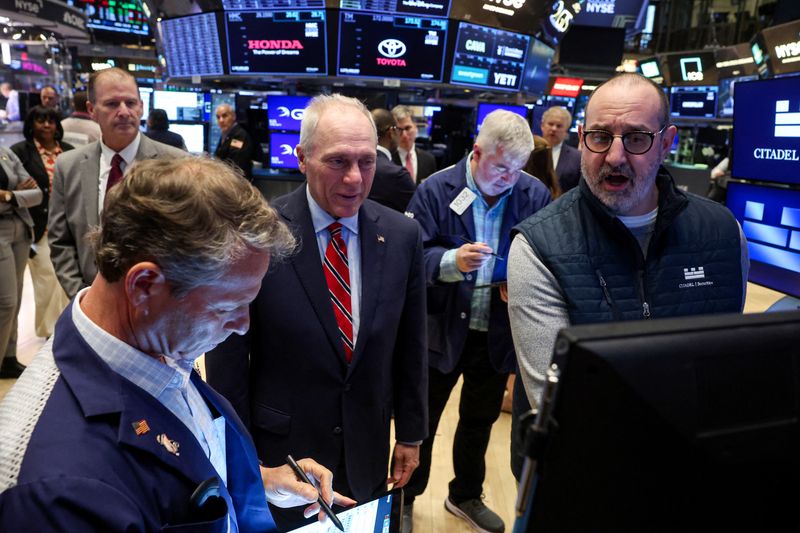
On days like Wednesday, Wall Street’s mood seems impossible to predict. Stocks climbed, with the Nasdaq finally showing green for the year, and global shares reached record levels. It didn’t make sense because the headlines weren’t saying much that was positive. However, the U.S. Congressional Budget Office gave a sliver of good news. They decreased their estimate of President Trump’s tax-cut impact on national debt by $1.4 trillion.
trade drama and the economic rumbles
Trade tensions were in the spotlight again. Trump doubled down on steel and aluminum tariffs. Negotiations with Europe and China hit snags. Wednesday marked the deadline for countries to show their best offers. Otherwise, new import taxes could kick in.
Meanwhile, China’s rare earth embargo from April is messing with global supply chains, especially in the auto industry. Some European factories hit pause on production.
economic alarm bells
Economic indicators weren’t too peachy, either. U.S. private sector hiring slowed markedly in May. It’s the slowest growth the sector has seen in over two years, not a great sign ahead of Friday’s non-farm payroll numbers. The services sector took a hit too, contracting for the first time in almost a year. Businesses are wrestling with rising input costs—the highest in over two years.
If you’re thinking of gold, it’s responding to inflation fears, while bonds are reacting more to stagnation. Treasury prices soared as the 10-year yield plunged.
the fed and powell’s predicament
Trump seized on the bleak data. He took his grievances public, urging the Fed Chair Jerome ‘Too Late’ Powell to slash rates. “Europe” has cut rates multiple times, he argued, inaccurately. The European Central Bank has actually made seven cuts. We’ll likely see an eighth soon. Over in Canada, their central bank is playing wait-and-see instead of cutting rates. They’re waiting on the fallout from U.S. trade policies, though another cut could be in the cards.
disinflation vs. inflation
Even with all the tariff talk, global disinflation seems to be the reigning champ. The OECD expects G20 inflation to drop from 6.2% last year to 3.6% this year, falling further to 3.2% in 2026.
But don’t forget the U.S.—it’s the outlier. Inflation there might tick up to just under 4% later this year. Some estimates, like those from Goldman Sachs, suggest tariffs might push it higher. Yet, compared to the rest of the G10, U.S. bond yields are riding high.
China and Europe face their own disinflationary battles. Their strengthening trade and financial ties might amplify these pressures, keeping prices in check.
deflation’s lurking specter
In the eurozone, inflation cooled to 1.9% in May. It’s under the ECB’s target, implying more rate cuts could be on the horizon. Economists hint at further easing by the ECB, potentially dropping rates to 1.5% by September.
China’s deflation struggle isn’t new, but it’s stubbornly persistent. Inflation barely nudges past 1%, and 10-year bond yields remain low. Investors are rightly skeptical about future price hikes. Beijing’s strategies haven’t changed this. The ongoing U.S. tariff saga only adds more uncertainty.
Reer-view mirror: a glance at the yuan
Let’s talk about China’s currency, the yuan. While it seemed like the yuan’s holding ground lately, its real effective exchange rate (REER) says otherwise. It’s weaker than it’s been since 2012. This weakness helps make Chinese goods very affordable globally, effectively exporting deflation. This could trigger a currency weakening race in Asia as countries aim to stay competitive.
Watch out: future market movers
Keep an eye on tomorrow’s happenings:
* Australia’s trade figures
* Revised South Korean GDP for Q1
* China’s Caixin services PMI
* ECB’s rate decision
* Canada trade and PMI data
* U.S. weekly jobless claims and trade data
* Fed officials, including Governor Adriana Kugler, are speaking
Opinions expressed are those of the author. They do not reflect the views of Reuters News, which, under the Trust Principles, is committed to integrity, independence, and freedom from bias.
(By Jamie McGeever; Editing by Nia Williams)