## The Problem of Distracted Driving
According to the National Highway Traffic Safety Administration, distracted driving contributes to roughly 9% of fatal crashes. However, researchers suspect the true number is even higher. Distracted driving remains a prominent issue, particularly among younger drivers.
## Technology to the Rescue
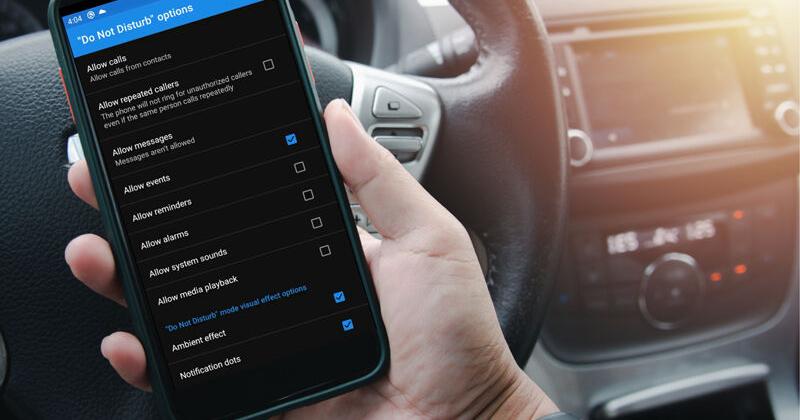
Despite the prevalence of texting bans across nearly all 50 states, distraction persists. Smartphones, often seen as the source of the problem, might actually help curb this risky behavior. Most modern devices now boast a “do not disturb” feature designed to minimize distractions.
### The Power of “Do Not Disturb”
New research by the [AAA Foundation for Traffic Safety](https://www.aaa.org/Foundation) highlights the effectiveness of this feature. When activated, it can significantly decrease smartphone interactions while driving. This tool is particularly useful during stressful situations like heavy traffic or adverse weather conditions.
### Overcoming Reluctance
Many drivers are hesitant to use “do not disturb” features. Common concerns include the fear of missing out (FOMO) on important calls or texts. Moreover, drivers often misunderstand the technology, thinking it restricts music and navigation access, which isn’t the case.
### Understanding Driver Hesitations
Research shows that younger drivers, aged 18-24, are generally more aware of these features. However, they often believe they can safely use their phones while driving. This attitude suggests a need for more targeted education and training.
| **Reason for Avoiding “Do Not Disturb”** | **Percentage of Drivers Concerned** |
|——————————————|————————————-|
| Fear of missing out (FOMO) | High |
| Misunderstanding of technology | Moderate |
| Inconvenience | Low |
## Encouraging Safe Driving Habits
To better understand the issue, researchers conducted a study with younger drivers over 10 weeks. After training on activating the feature, participants were observed for changes in behavior. The results were promising with a 41% decrease in phone interactions and fewer chances of picking up the phone.
### Key Findings from the Study
– **50%** of participants initially unaware of the feature.
– **85%** did not know how to activate it.
– Post-study, **100%** were aware and informed.
– **41%** reduction in interactions with their phones.
## Strategies to Increase Usage
Dr. David Yang emphasizes the importance of overcoming barriers to using these features for better road safety. Increasing awareness alone isn’t enough; it requires behavior-focused strategies, smarter automation, and possibly incentives.
### Recommendations by Experts
The [AAA Foundation](https://www.aaa.org/Foundation) suggests several strategies:
– Launch targeted public education campaigns.
– Integrate these features into driver training programs.
– Improve the technology’s automatic activation.
– Use reminders and incentives for encouragement.
– Address misconceptions via in-app messaging.
– Leverage influencers to promote usage among the youth.
By understanding and addressing the reasons why drivers avoid “do not disturb” features, society can take significant steps toward reducing distracted driving fatalities. As Jake Nelson from AAA notes, these devices hold the potential to prevent risky behavior if used wisely.