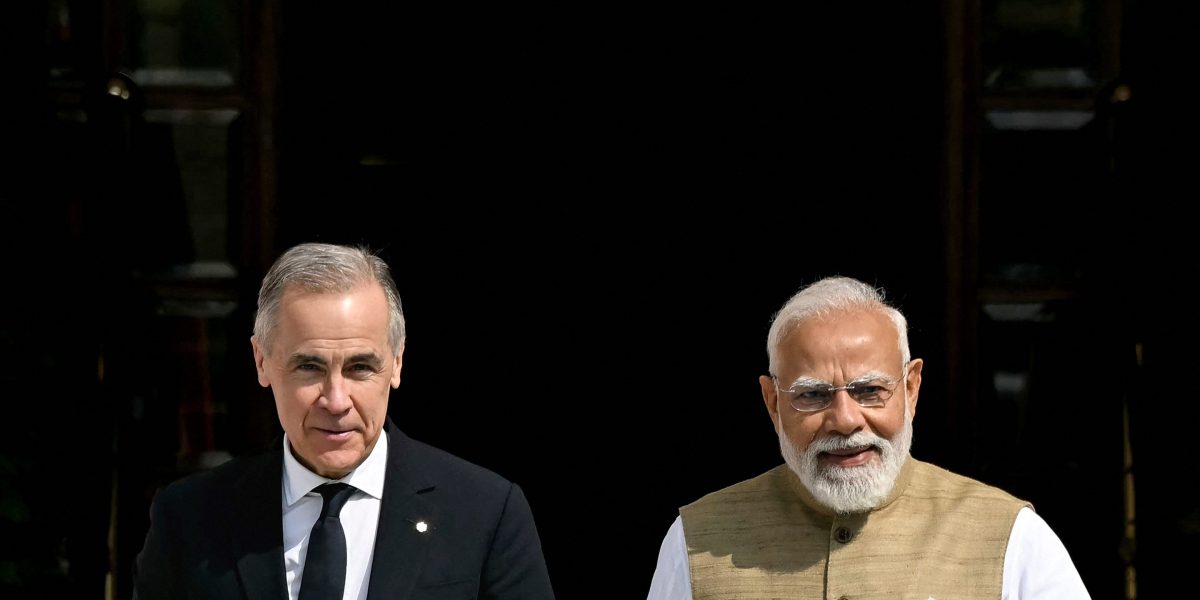
Mark Carney, the former Governor of the Bank of England and Canada’s prime minister, took the stage at the World Economic Forum in Davos to deliver a rather stark message. He warned that the rules-based international order appears to be in a “rupture.” Major powers, such as the United States and China, are wielding economic integration as a weapon. Furthermore, tariffs are being used as leverage, while financial infrastructure is serving as a tool for coercion, and supply chains are rife with vulnerabilities ripe for exploitation. His pointed advice for middle powers was, “If we’re not at the table, we’re on the menu.” Fortune(https://www.weforum.org/)
These middle powers, however, are indeed a “motley group,” according to Eswar Prasad, the distinguished Tolani Senior Professor of Trade Policy at Cornell University. Such powers encompass a wide range including wealthy and less affluent nations, making aligned interests a complex affair.
Contents
The Dynamics of Trade
Globalization as a political venture has wavered in its perceived stability. Since U.S. President Donald Trump assumed office in 2016, there has been a notable shift. The American stance leaned towards reducing dependence on China via tariffs, stringent export controls, and investment scrutiny. Washington, it appears, is now more inclined to bypass multilateral forums and pursue unilateral actions. The consulting firm McKinsey notes that “geopolitical distance” in trade and investment is diminishing as nations increasingly align trade and investments with strategic alliances. [McKinsey Report](https://www.mckinsey.com)
Trade persists in expanding, reaching an unprecedented value of about $35 trillion last year. However, much of this trade transpires within geopolitical blocs rather than extending across them. Prasad remarked, “Trade and financial flows are fragmenting, deepening those rifts.”
The Asian Outlook: China and India
Optimism is elusive when gazing towards Asia. The International Monetary Fund (IMF) predicts that China’s economy will grow by 4.5% this year. Despite this forecast, lingering issues like overinvestment and industrial policies create potential financial vulnerabilities. China previously made strides in rebalancing its economy with consumption leading GDP growth over investment. Yet, the pandemic nudged Beijing back to “credit-fueled, investment-driven growth.”
Neighbouring India initially seemed poised to benefit from U.S. “friendshoring,” thanks to its amiable relations with Washington. Yet, apart from some notable shifts from companies like Apple, India lags behind smaller markets like Vietnam. Prasad suggests, “It seemed the stars were aligning well for India, but the opportunity might be less than anticipated.”
Variable Geometry and Alliance Building
Mark Carney has previously championed “variable geometry,” urging governments to form alliances aligned with specific interests. Nonetheless, Prasad warns these alliances lack common values or foundational trust. This limitation makes Carney’s proposition a rather inadequate replacement for established international institutions governing global diplomacy and commerce. He says, “Without deep alliances built on mutual trust, crafting a new rules-based order becomes a formidable challenge.”
The Corporate Conundrum
In this complex new world, what recourse do global businesses have? Prasad posits that the era of “lean, mean, hyper-efficient supply chains” has ended. The current corporate discourse is centered on resilience. Companies focus on diversifying suppliers, reinforcing ties with geopolitically aligned nations, and emphasising domestic markets. Yet, the response of businesses could paradoxically aggravate the situation. Prasad reflects, “I fear we’re stuck in the doom loop until a significant system correction.”
The business community previously resisted U.S.-China decoupling, appreciating China’s dual role as both a manufacturing giant and a consumer economy. Now, as firms retreat from economically and geopolitically contentious regions, they may inadvertently intensify the very risks they intend to sidestep. Prasad warns, “Paradoxically, by withdrawing, they might exacerbate the very perils they seek to avoid.”
In closing, it seems we may remain ensnared in this cycle until the system undergoes a necessary correction, albeit one that could prove rather unsightly.