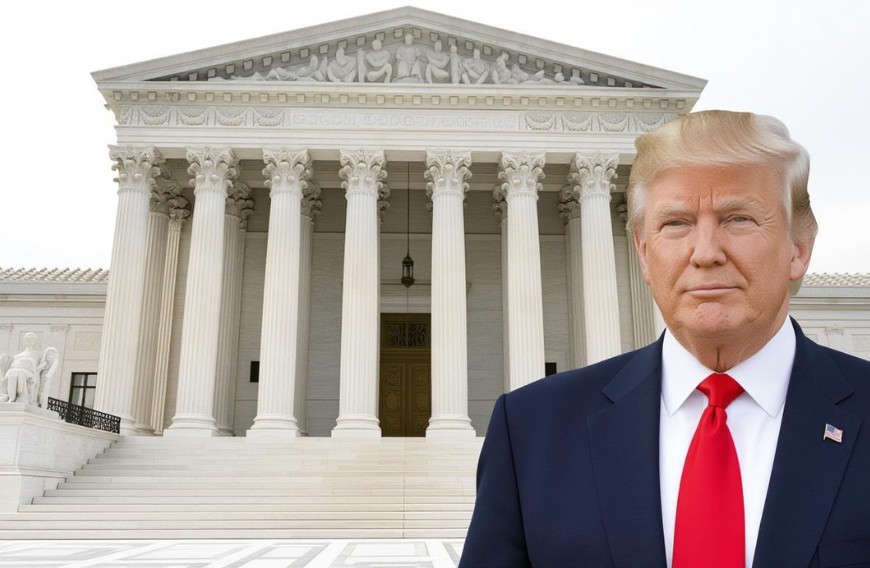
On Tuesday past, the United States Supreme Court announced something of particular interest. They’ve graciously agreed to entertain an appeal from President Donald Trump’s administration regarding tariffs deemed illegal by lower courts.
This intriguing development will see oral arguments commence in the first week of November—a rather prompt timeline, one might note. Not your usual leisurely pace for such matters.
Indeed, the Trump administration has been in quite the kerfuffle over these tariffs. They contend, you see, that they wield legitimate power under the International Emergency Economic Powers Act (IEEPA), which they argue allows for such actions in times of national emergency. It’s all in the name of national security and protecting the economy, they claim, waving concerns about trade deficits and other nasties.
However, critics are having none of it. They hold staunchly to the belief that tariff-setting is a matter for Congress, as per the mighty U.S. Constitution’s separation of powers. The IEEPA, they believe, was crafted for far more narrowly defined emergencies—not as a carte blanche to impose trade duties at whim.
For a delightful read on just how contentious this matter is, you might peruse Billions in Tariffs at Risk as Supreme Court Reviews Trump Policy.
Furthermore, in May, the U.S. Court of International Trade offered a rather decisive opinion. They decreed that the IEEPA does not empower a president to levying such broad tariffs. A legislative task it is, and should remain, they said. Following this, the Federal Circuit Court of Appeals upheld this ruling in August, reinforcing the time-honoured division of powers.
Sceptics of the administration’s stance will eagerly quote Jeffrey Schwab of the Liberty Justice Center. He’s on record stating, “Congress, not the President alone, wields the constitutional power to impose tariffs.” Quite the proclamation, wouldn’t you agree?
In case you fancy a deeper dive into the economic ramifications, Supreme Court blocking Trump tariffs could ‘end’ US economy: Peter Navarro presents a riveting perspective.
Now, should the Supreme Court ultimately dismiss these tariffs, the repercussions would be nothing short of monumental. The U.S. government could find itself rifling through the coffers to return possibly up to a trillion dollars in collected duties. The very balance of power between the executive and legislative bodies could shift, potentially setting a new precedent for future trade and foreign policy actions.
Conversely, a verdict favouring the administration might well grant the president expanded authority in matters of economic and national security. Quite the conundrum, wouldn’t you say?
All in all, the decision, expected early next year, promises to be a defining moment in U.S. trade policy. As we await the outcome, one must ponder the path it will pave for executive authority in years to come.