Producing accurate measures of jobs and inflation isn’t as simple as one might think, especially as the economy finds itself in a state of flux. Given this, it’s hardly surprising that July’s data revisions were so substantial. We’re in the early stages of grappling with the administration’s policy shocks, including tariffs. Consequently, the Bureau of Labor Statistics (BLS) finds its job growing ever more challenging.
Without data that’s both objective and perceived as objective, financial markets and government policy are put at perilous risk. Hence, the alarm surrounding the dismissal of Bureau of Labor Statistics Commissioner Erika McEntarfer is quite justified. The nomination of EJ Antoni, from the conservative Heritage Foundation, raises eyebrows even further. To safeguard its own interests and the nation’s economy, the White House must curtail the fallout from these decisions.
Regrettably, Antoni’s nomination solidifies the notion of this role becoming a partisan appointment. It suggests that as administrations change, so might the data’s portrayal, with biases conveniently tucked in to serve purposes. This stance signals to financial markets that official statistics are no longer reliable. Regardless of which political party holds sway, expectations might be set to anticipate manipulated employment and inflation figures.
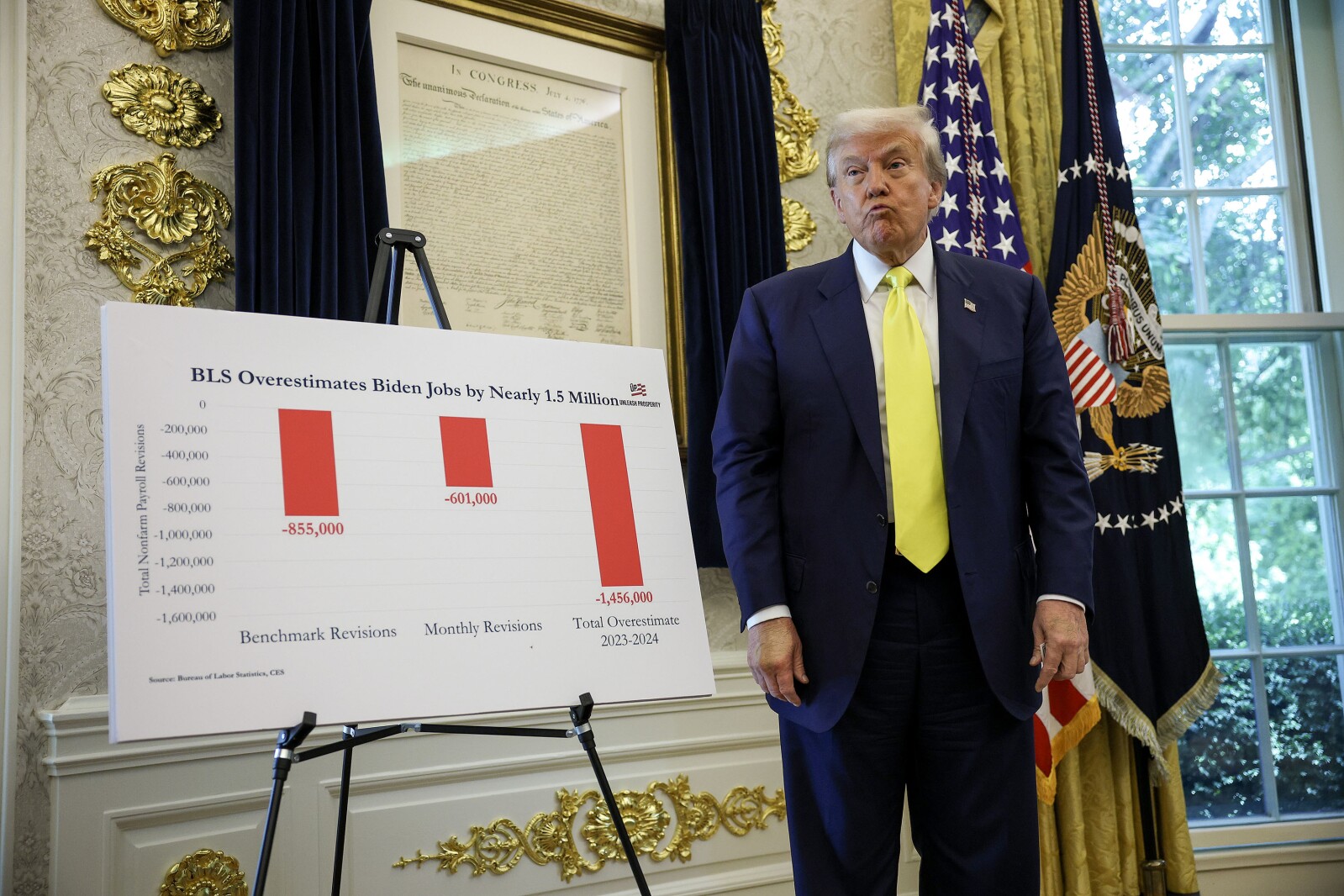
The alleged reason for McEntarfer’s removal was the bureau’s recent hiring data release. The July initial estimate, along with revised figures for May and June, apparently painted the administration in an unfavourable light. Admittedly, the downward adjustments to previous months were larger than usual, thus prompting legitimate inquiries about the bureau’s methodology and its potential improvements. Yet, there’s no justifiable reason to question McEntarfer’s integrity or that of her respected team.
The opacity and uncertainty bred by this situation elevate financial risks. Moreover, persistent suspicions about understated inflation push bond yields higher, inflating borrowing costs for consumers and producers. This is hardly what the administration desires, yet it’s precisely where we stand.
Better data accuracy – ensuring smaller revisions as fresh information becomes available – is crucial. Achieving this demands enhanced resources and improved statistical methods. Unfortunately, such priorities seem lacking. Recent reductions in BLS staffing due to cost-cutting measures have hindered timely data collection. Shockingly, earlier this year, Commerce Secretary Howard Lutnick axed the Federal Economic Statistics Advisory Committee. This group of unpaid experts was dedicated to refining data collection and analysis.
It’s a pity the White House didn’t simply extend an apology to McEntarfer. They could’ve urged her to stay on, promising the resources the bureau requires for improvement and allowing FESAC to resume its vital work.
If Antoni’s appointment proceeds, he must realise the concern sparked by his nomination. His obligation should be to maintain the utmost objectivity in data management and dissemination. Although this might be a tall order, it is still crucial to reinforce the perception that the BLS operates free from political bias. Otherwise, failing to restore credibility will result in far more damage than any one dismal jobs report could inflict.